Harmful algal blooms (HABs) in my ‘hood

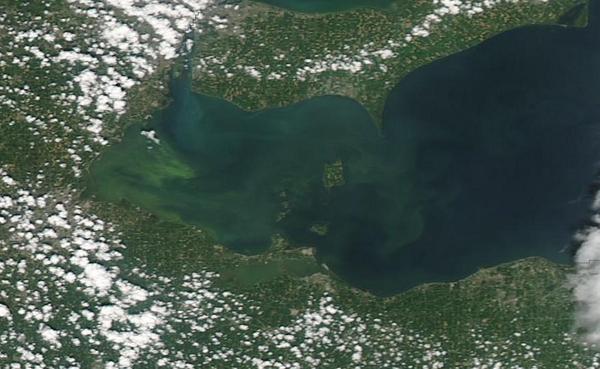
Aqua Modis Erie HAB

August 2014 – Massive Microcystis bloom in Lake Erie as seen by Aqua Modis (NOAA)

I grew up in northeast Ohio, not far from Lake Erie. For you Europeans, that’s one of the Great Lakes which separate the USA from Canada. For this reason – well, and the fact that I’m a planktonophile – I’ve been following the story about Toledo, Ohio’s, drinking water restrictions closely. Last weekend residents of Toledo were warned not to drink their tap water, swim in the lake, wash their hands or bathe in the water, or even to let their pets romp on the shores of Lake Erie. The reason for the ban? Lake Erie was experiencing a spectacular (to a plankton ecologist!) harmful algal bloom (HAB) –  a proliferation of phytoplankton.  This one was so spatially extensive it could clearly be seen from space, and even Buzzfeed and Huffington Post reported the event (pop culture media reporting on plankton!).

Toledo tap water samples were found to contain dangerous levels of microcystin, a biotoxin produced by the cyanobacteria Microcystis spp. The toxin can induce dizziness, nausea, vomiting, diarrhoea, and liver damage when ingested and even contact with the water may induce rashes. As far as HAB effects go, Microcystis’s aren’t the worst – some HAB taxa cause amnesia or even paralysis. Nevertheless, summer is hot and the ban on drinking water led the inevitable rush on supermarket bottled water which resulted in an area shortage.
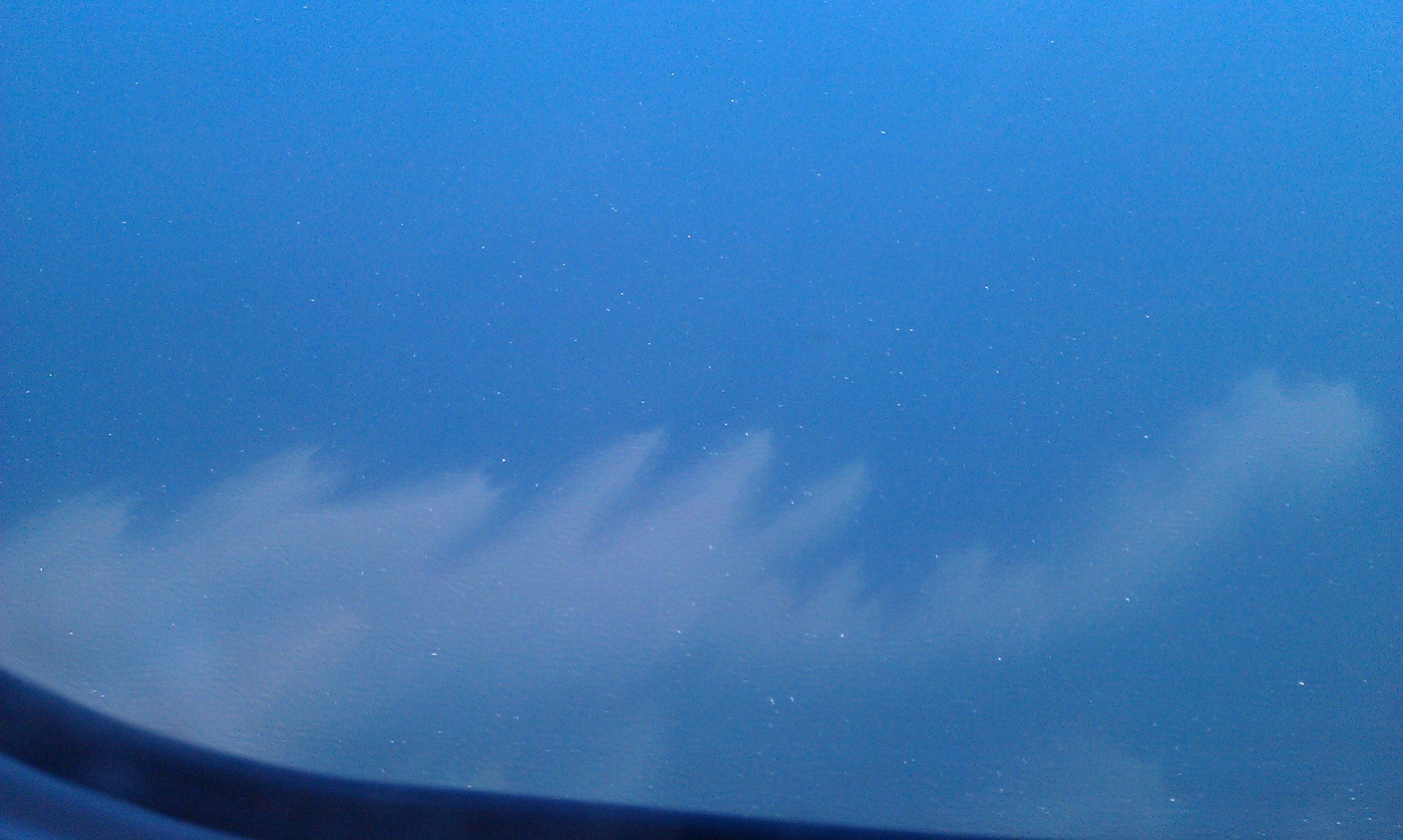
Microcystis bloom in Lake Erie 2011 AMG

My attempt at HAB photography from 10,000 feet, 2011
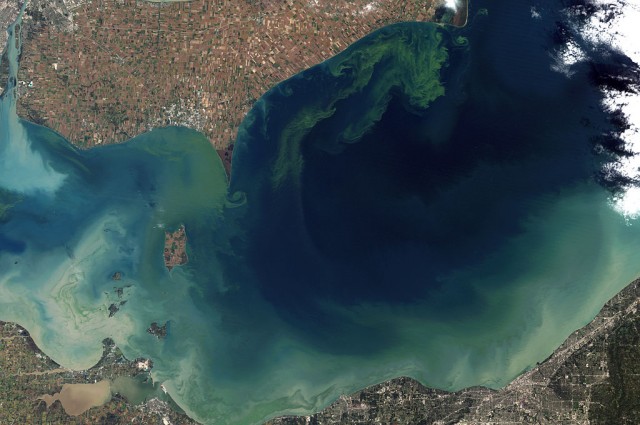
Lake Erie Bloom 2011

A more professional photo of Lake Erie’s 2011 Microcystis HAB (NOAA)

This isn’t the first time Lake Erie has been impacted by a HAB. In 2011 an enormous Microcystis bloom covered 20% of the surface area of the lake, causing a hypoxic dead zone, fish kills, and green sludge on the beaches. I was lucky enough to see that particular magnificent bloom from the air as my plane circled the lake to land in Cleveland (note: I was in the aisle seat and my seat mate was definitely not as excited about this event as I was. He was kind enough to take a photo for me though – check it out to the right). The reason HABs are interesting to me is because they are a clear example of where plankton and policy collide. Their human health, fishery and tourism impacts grab headlines and public interest, and are therefore of concern to local and regional policy makers. In fact, two current pieces of European legislation, the Water Framework Directive and Marine Strategy Framework Directive, contain objectives about limiting the occurrence and impacts of these events.

Like the 2011 Lake Erie HAB, the current Microcystis bloom was likely caused by nutrient run-off from land, a symptom of eutrophication. Lake Erie has suffered from eutrophication historically; in the 1960s and 1970s the Lake was so eutrophic due to agricultural nutrient run off, sewage inputs and industrial pollution its waters were the colour and consistency of pea soup (the Cuyahoga River in Cleveland also caught on fire but that’s another story). During the 1980s the US and Canada, in a stunning example of transboundary ecosystem management, implemented a programme to reduce harmful inputs and clean up the lake (the accidental introduction and spread of the invasive zebra mussel, Dreissena polymorpha, which filtered phytoplankton from the water, also helped). During my childhood Lake Erie was a place to sail, fish and swim. So, why the resurgence of eutrophication symptoms? Lake Erie is fundamentally a different ecosystem than in it was 40 years ago and one key reason for this (amongst other anthropogenic pressures such as wetland loss, invasive species and aging sewage systems) is climate change. In the North Sea, warming temperatures have been found to exacerbate eutrophication and that could be what is happening in Lake Erie. In other words, warmer waters are more sensitive to nutrient loading, and nutrient levels which previously may have been too low to generate a HAB now make these blooms possible. If this is indeed the case in Lake Erie, I hope policy makers make hard and difficult choices about nutrient management in the catchment, as I want future generations to have the happy memories of a healthy lake that I have.

Abigail McQuatters-Gollop, Plankton and Policy
Posted in HABs, Marine Conservation, Plankton, Policy | Tagged , , , | 3 Comments

Tuna, plankton and plum wine – exploring science-policy in Japan

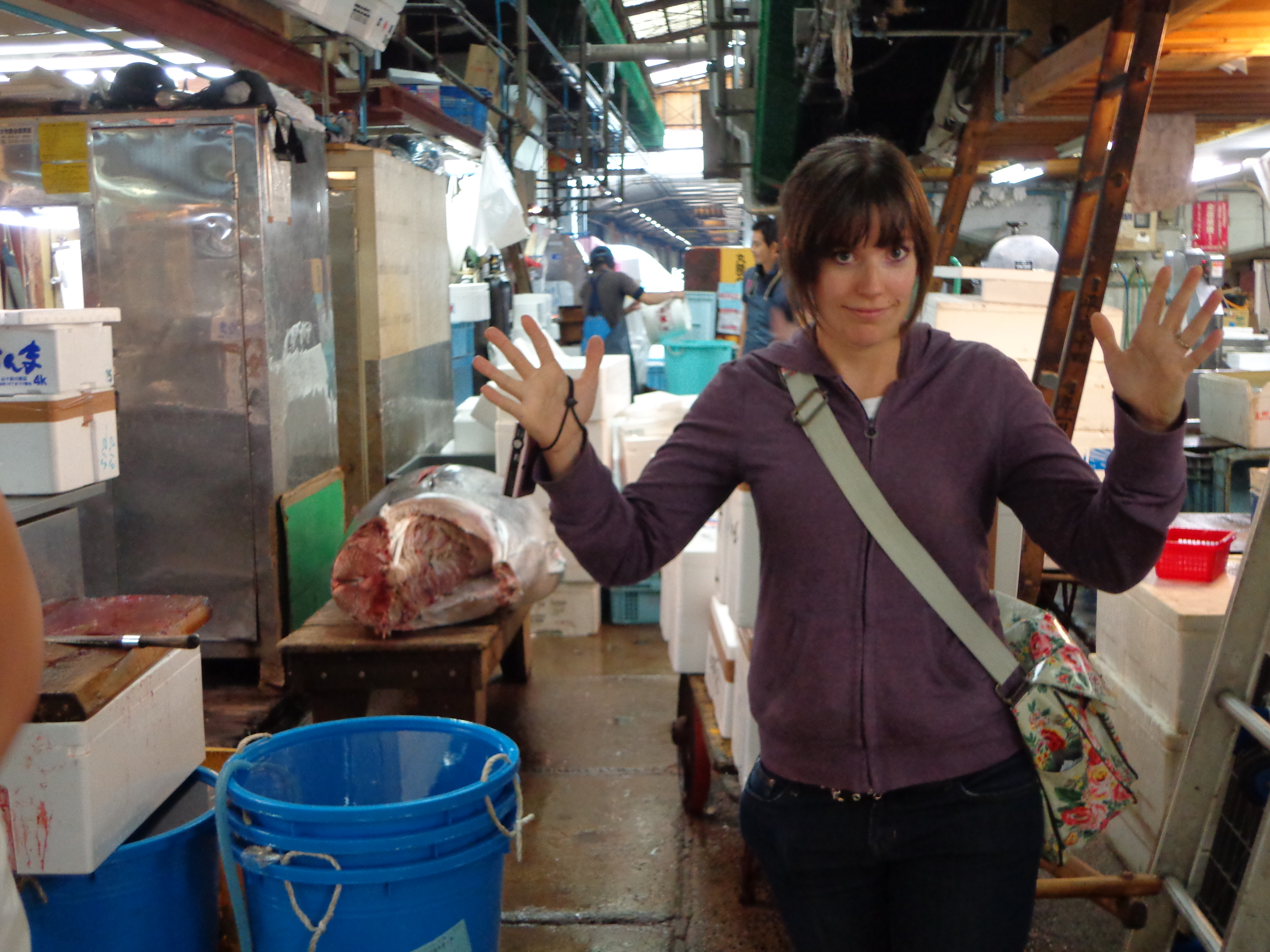
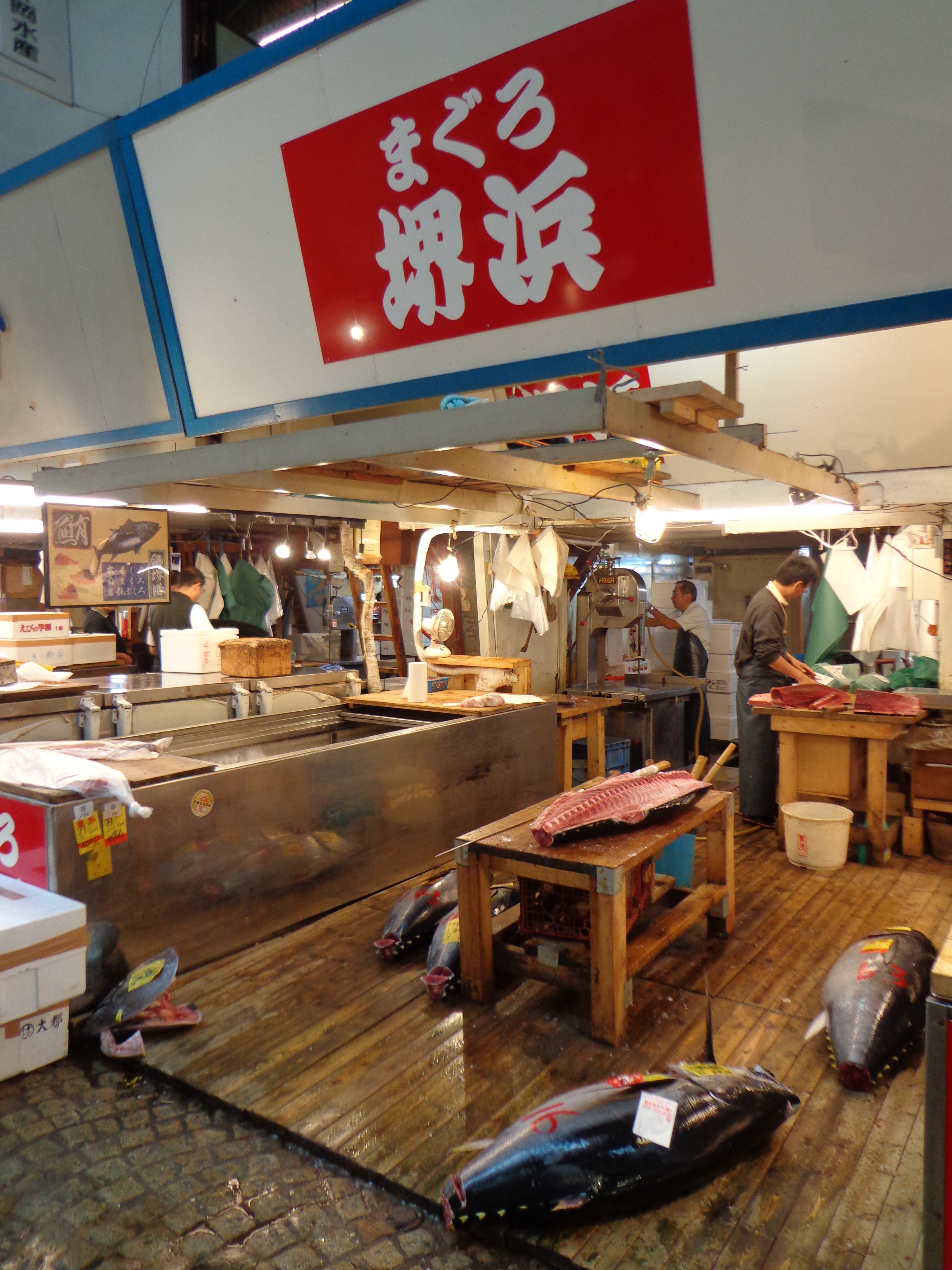
Tuna prep. That is some red flesh!

Tuna prep. That is some red flesh!

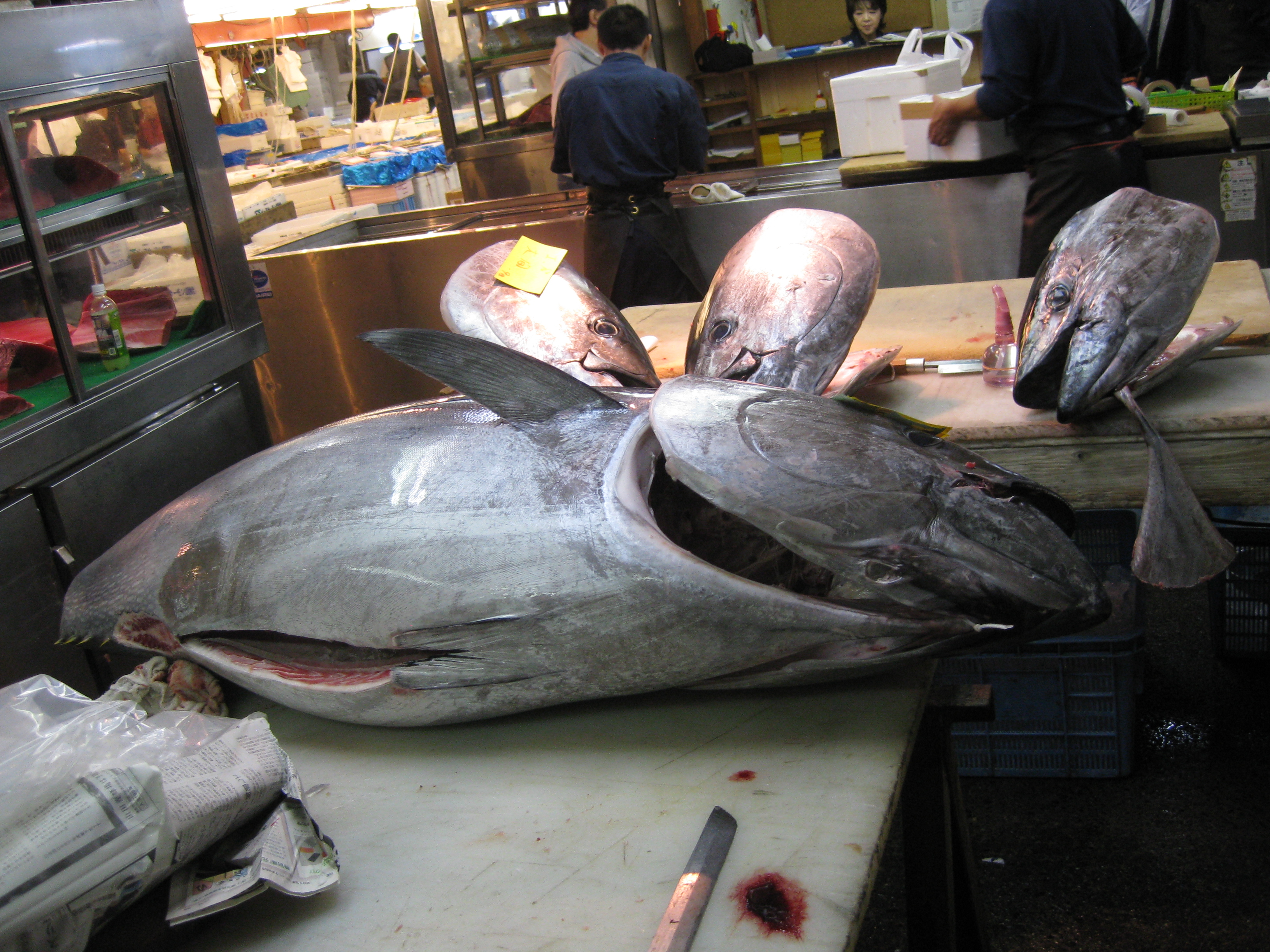
One of my interests is to improve and expand the use of CPR data in marine policy, not only in the UK, but globally. There is one country in particular where I’ve really wanted to learn more about the science-policy interface and help scientists work better with policy makers: Japan. I first visited Japan in 2012 and was intrigued by this country of anomalies, contradictions and beautiful traditions and customs. While in Tokyo I visited Tuskiji fish market, the largest fish market in the world. The place was immense and hosted the most amazing marine biodiversity. I didn’t arrive until 4:30am so didn’t get to watch the world famous tuna auction, and I feared I wouldn’t encounter any bluefin during my visit. Well, I was very, very wrong. There were bluefin tuna. Hundreds and hundreds of bluefin tuna, most of which were bigger than me! Bluefin tuna are severely threatened and WWF actually considers them endangered. A key driver of bluefin overfishing is demand for high quality bluefin sushi. I was surprised to see so many individuals of what I knew to be a threatened species. I had many questions: What is Japanese marine management like? What kind of data inform fisheries management? Do we understand the role of climate in bluefin dynamics? If bluefin are endangered, how is this level of fishing OK? Or even possible? Are the gaps in the science or are the barriers at the interface between science and policy?

The tuna are THIS big!

The tuna are THIS big!

I'd be no match for one of these guys.

I’d be no match for one of these guys.

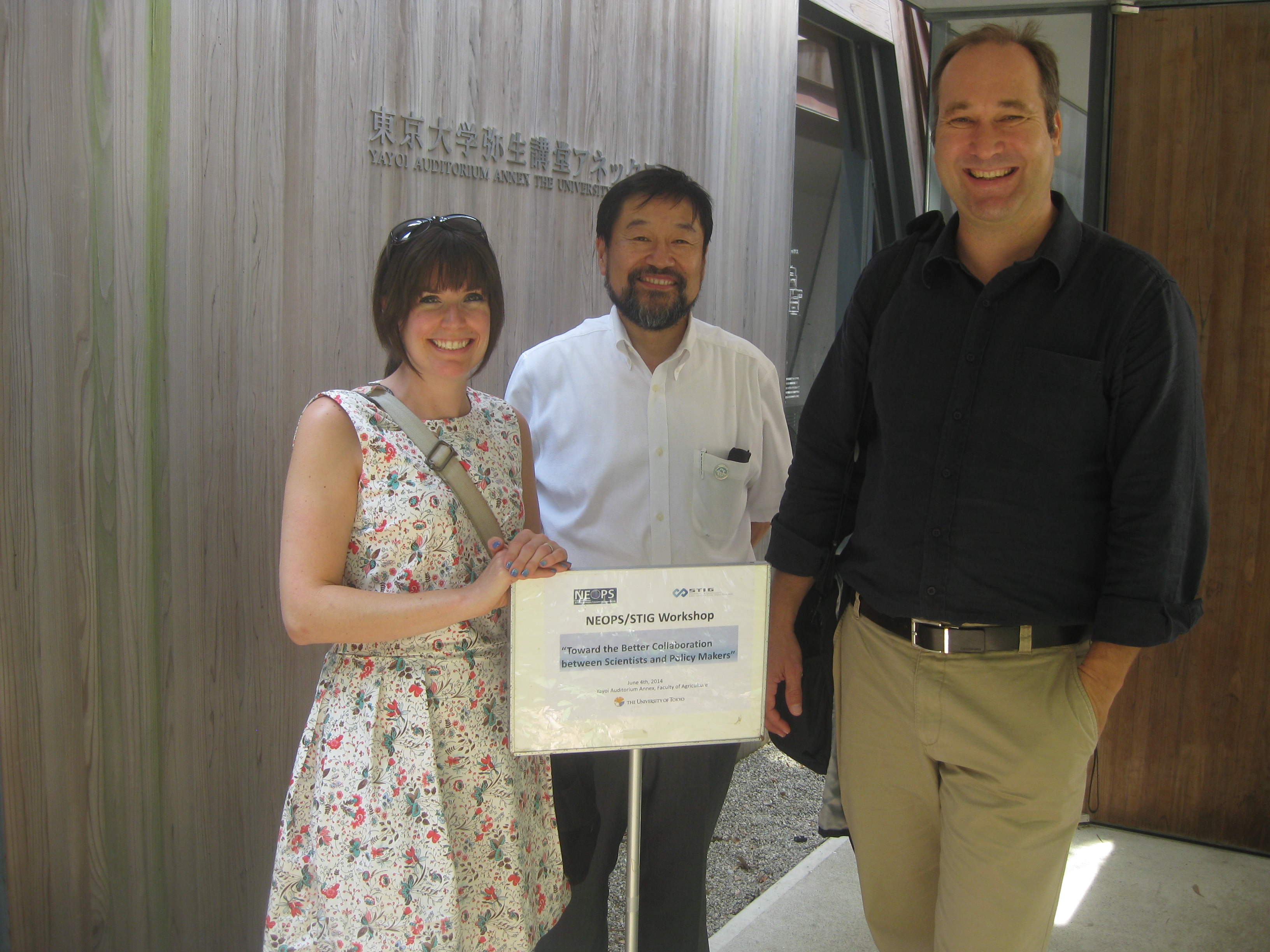
NEOPS

Toward the Better Collaboration between Scientists and Policy Makers

When I asked the above questions to a Japanese colleague, I was shocked to find out that there is little communication between scientists and policy makers in Japan and decisions are not always based on scientific evidence. So in June 2014 I went to University of Tokyo to take part in a workshop entitled “Toward the Better Collaboration between Scientists and Policy Makers”. The workshop was aligned with a multimillion dollar Japanese research project called NEOPS (The New Ocean Paradigm on its Biogeochemistry, Ecosystem, and Sustainable Use). The audience was a mix of Japanese government scientists and researchers, and the speakers were ‘experts’ in different aspects of science-policy working in Japan and internationally. I spoke about the use of CPR data to develop policy indicators and what lies behind SAHFOS’s successes in informing policy. The discussions throughout the day were fascinating. I was asked questions like ‘If you want to tell policy makers about a marine issue, what do you do?”. When I answered “Well, I phone or email Defra (UK government body in charge of marine policy) and I talk to them”, I was met with incredulity. It seems the relationship UK workers at the science-policy interface have with our policy makers just doesn’t exist in Japan. What was even more surprising, is that in the case of fisheries, the scientists and fisheries policy makers are in the same building but just don’t communicate.

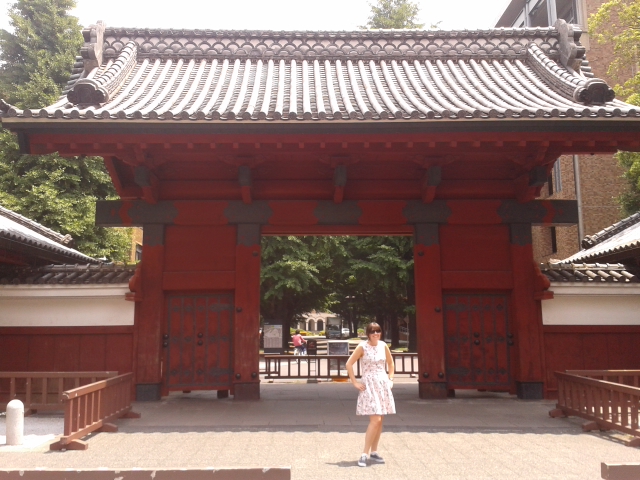
The famous Akamon (Red Gate) of University of Tokyo

The famous Akamon (Red Gate) of University of Tokyo

In addition to the workshop at the University, I also spoke at the Japanese Agency for Marine-Earth Science and Technology (JAMSTEC) and the Fisheries Research Agency (FRA), which gave me the opportunity to meet many scientific researchers and a few policy makers. I spoke with the scientists extensively about the merits of long-term time-series, including the CPR, and how time-series research can reveal incredibly valuable insights that should be used to provide evidence for decision making. I was repeatedly asked the same questions along the lines of: How do you get policy makers to take scientific advice? How can we get our policy makers to care about issues we know are important? How can scientists begin to establish personal relationships with policy makers?

Networking, Japanese style, with JAMSTEC colleagues

Networking, Japanese style, with JAMSTEC colleagues

My impression was that Japanese scientists aren’t, or don’t feel, heard and that the links between science and policy are not explicit or transparent. There appears to be a lack of trust on both sides of the science-policy interface: Japanese policy makers don’t seem to want advice from scientists, and scientists don’t feel they can approach their policy makers. The personal relationships that UK scientific advisors have with our policy makers appear to be missing. Additionally, it seems that many of the scientists I met weren’t sure how to communicate with policy makers. We talked a lot about formatting and targeting scientific information, using indicators to communicate and making communication issue-linked. We kept coming back to examples of how SAHFOS does these things well with CPR data, and how lessons we’ve learned at SAHFOS might be extrapolated and applied in Japan.

So where does this leave the bluefin? According to some Japanese fisheries scientists I spoke to, the scientific community is completely aware that bluefin are overfished. However, as in many other parts of the world (including sometimes Europe), the desire for money, jobs and to maintain the fishing industry wins out over scientific recommendations and fisheries advice is severely watered down or ignored completely when setting catch limits. The good news is that just last week the Japanese Fisheries Agency has agreed to tighten quotas for seven fish stocks and “impose cuts on catching young Pacific bluefin tuna to help them reproduce”.  If these quotas are meaningful and enforced, this could be a positive step towards sustainability for some Japanese fisheries.

I find it interesting that in Europe and Japan we face some of the same challenges for fisheries management, when the processes and evidence flow supporting marine ecosystem management in general appear so different between the UK and Japan. I did feel as if the scientists I met became more positive that there could be a way forward the more we talked (and the more plum wine was consumed!), and I hope the relationship between Japanese scientists and their policy makers improves and that the use of evidence in decision making grows.

Have you had any science-policy experiences outside your culture?

Abigail, Plankton and Policy


And a few gratuitous non-work related snaps:

Tokyo lights, Shinjuku

Tokyo lights, Shinjuku


IMG_5345

Tokyo at night – from the Metropolitan Government Building


Hakone-jinja, Hakone

Hakone-jinja, Hakone


The Diabutsu, Kamakura

The Diabutsu, Kamakura


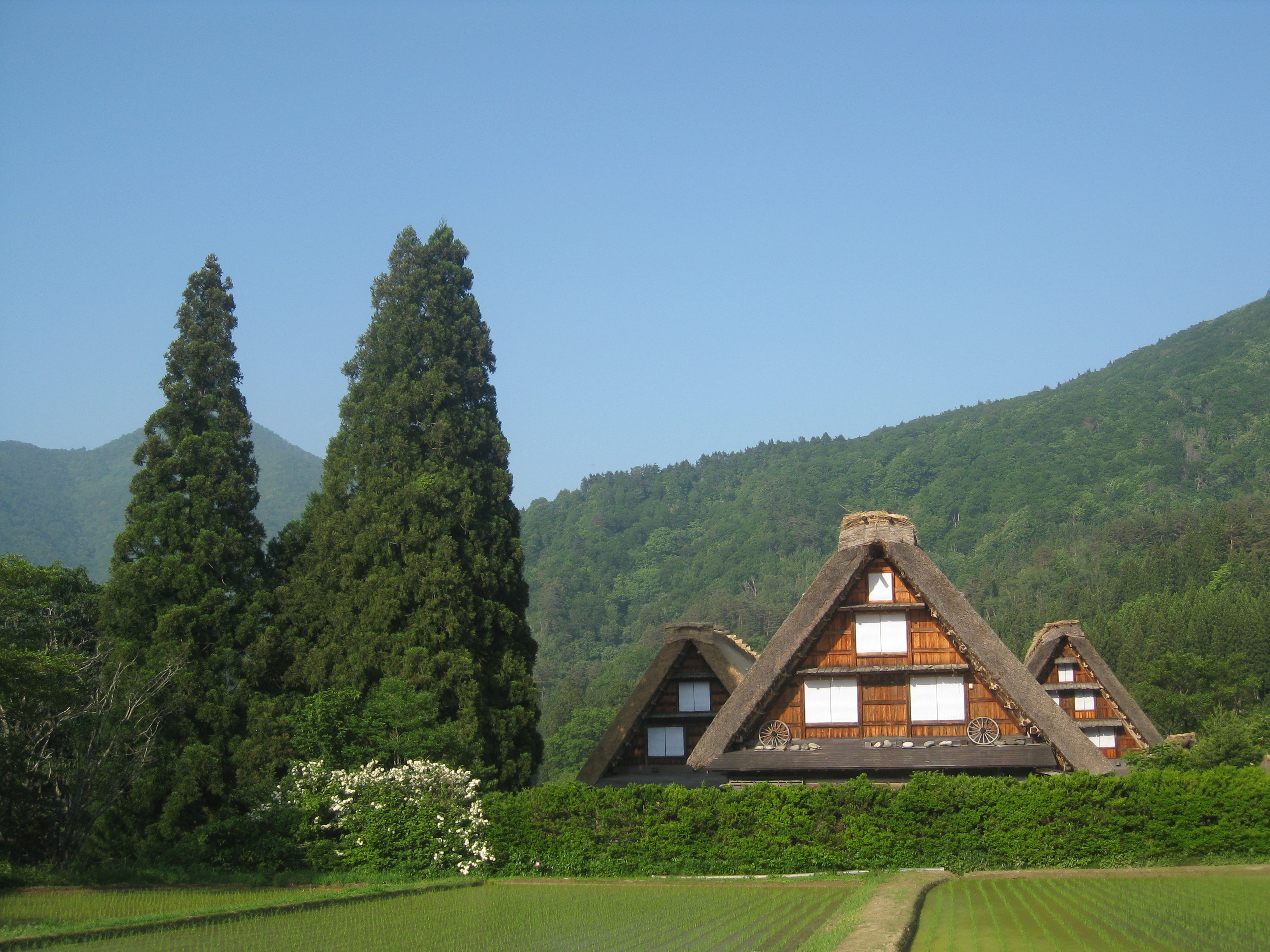
Gassho-zuri thatched houses at Shirakawago UNESCO World Heritage Site

Gassho-zuri thatched houses at Shirakawago UNESCO World Heritage Site


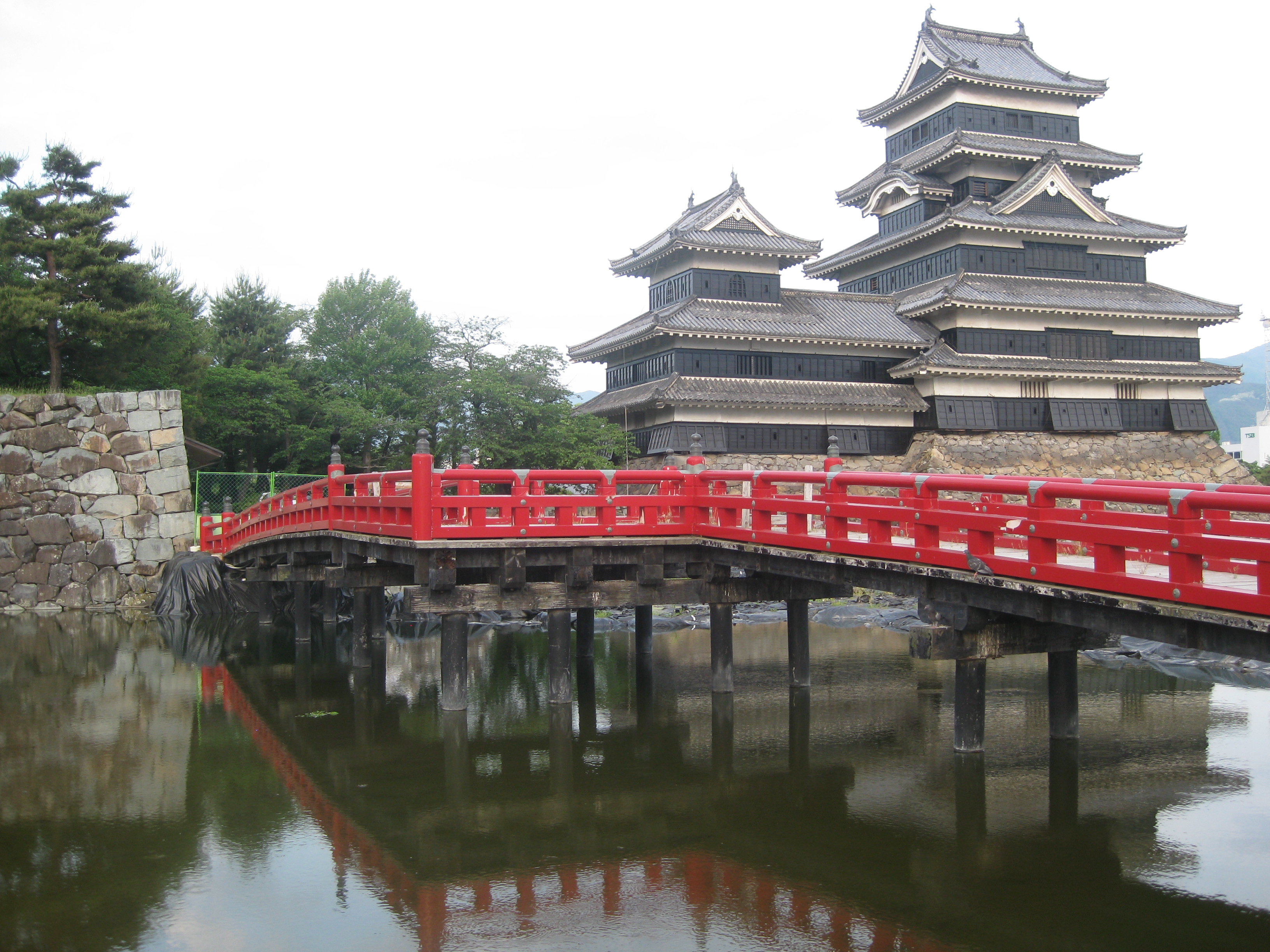
Matsumoto castle - built in 1504!

Matsumoto castle – built in 1504!


Posted in biodiversity, Fisheries, Knowledge Exchange, Marine Conservation, Plankton, Policy | Tagged , , , , , , , , , , | 4 Comments

Knowledge exchange: Turning science into policy

Welcome to Plankton and Policy’s blog – although I’ve written guest posts elsewhere, this is the first post I’ve ever written for my own blog. It’s hard to know where to start, but I think a good place would be with the inspiration behind Plankton and Policy – my NERC Knowledge Exchange Fellowship “Interpreting and targeting NERC-funded research outputs to inform and influence marine policy”.

The aim of my fellowship is to maximize policy impact of NERC-supported science, expertise and data, particularly that from the Continuous Plankton Recorder (CPR), by directly informing UK, EU, and international policy- and decision-making. I love working at SAHFOS and the Continuous Plankton Recorder is an amazing and unique dataset (~1 million samples analysed! Over 500 plankton taxa identified! An 83 year ecological time-series!) which generates progressive multi-scale science. What really excites me is seeing  science applied as evidence to the decision making process, and during the past few years my role at SAHFOS has steadily gravitated towards this activity. However I’ve constantly faced the same challenge many scientists face when it comes to generating policy impact – it’s difficult to get consistent funding for this work. When I wrote my NERC KE Fellowship application in spring of 2013 I felt like I was writing a job description for my dream job. If I got the fellowship I’d actually be funded to spend a significant chunk of my working life getting paid to do what I really wanted to do – facilitate the provision of scientific evidence directly into the policy process. When I found out in July 2013 that I was successful in my fellowship application I could not believe it. Me, a NERC Fellow! I’d finally have the time to consistently focus on the science-policy interface instead of fitting policy work in around funded projects.

My fellowship started on 1 September 2013, which, somehow, is now ten months ago. During those ten months I’ve presented at UK, EU and international policy meetings; chaired the implementation of the Marine Strategy Framework Directive for pelagic habitats at the UK and OSPAR levels; presented my policy science at UK and international conferences; met other UK and international policy ecologists at NERC and non-NERC networking events; received mentoring through the NERC network; and given over 15 invited talks. My fellowship has allowed me to focus on working with UK and European policy makers in a targeted and proactive manner and has helped raised the profile of the CPR as well as SAHFOS’s policy expertise in the UK and European policy arenas. It really is everything I wanted it to be.

It was actually my NERC mentor who suggested I start a blog and website in order to tell people about the science-policy work I’m doing through my fellowship and engage with others working on or interested in the same area. I’ve been an avid tweeter for years now but a blog has always seemed intimidating; but, here I am and here is Plankton and Policy. Like Twitter, one aspect of a blog that appeals to me is the opportunity to put some humanity into the science-policy interface and show readers (if there are any readers!) that applying science to policy is a process which is not straightforward and which is undertaken by real people, like myself, who are trying to work together to figure out the best way to deliver a sustainable marine environment.

Welcome to Plankton and Policy!

Abigail, Plankton and Policy

Posted in biodiversity, Knowledge Exchange, Marine Conservation, Plankton, Policy | Tagged , , , , , , , , , , , | Leave a comment